
Running a Sex Offender Check in Edgefield County
The South Carolina Law Enforcement Division registry guidance routes the public to the South Carolina Sex Offender Registry Tool, commonly called SORT. SLED and county sheriffs maintain the state system together. For Edgefield County, the sheriff handles the local registration role, while SORT provides the public search, map, and notification functions. No separate Edgefield County public registry list or locally published appointment schedule was found in the official sources.
SORT is free. It begins with conditions of use and a captcha, then offers name and geographical paths. SLED recommends current Chrome or Edge because Firefox and Safari may behave unpredictably. A matching profile reflects a registration duty based on a conviction and governing law. It does not make a new claim about current behavior or tell the reader how a person will act.
The assigned SLED registry source shows the official gateway for Edgefield County sex offender checks.
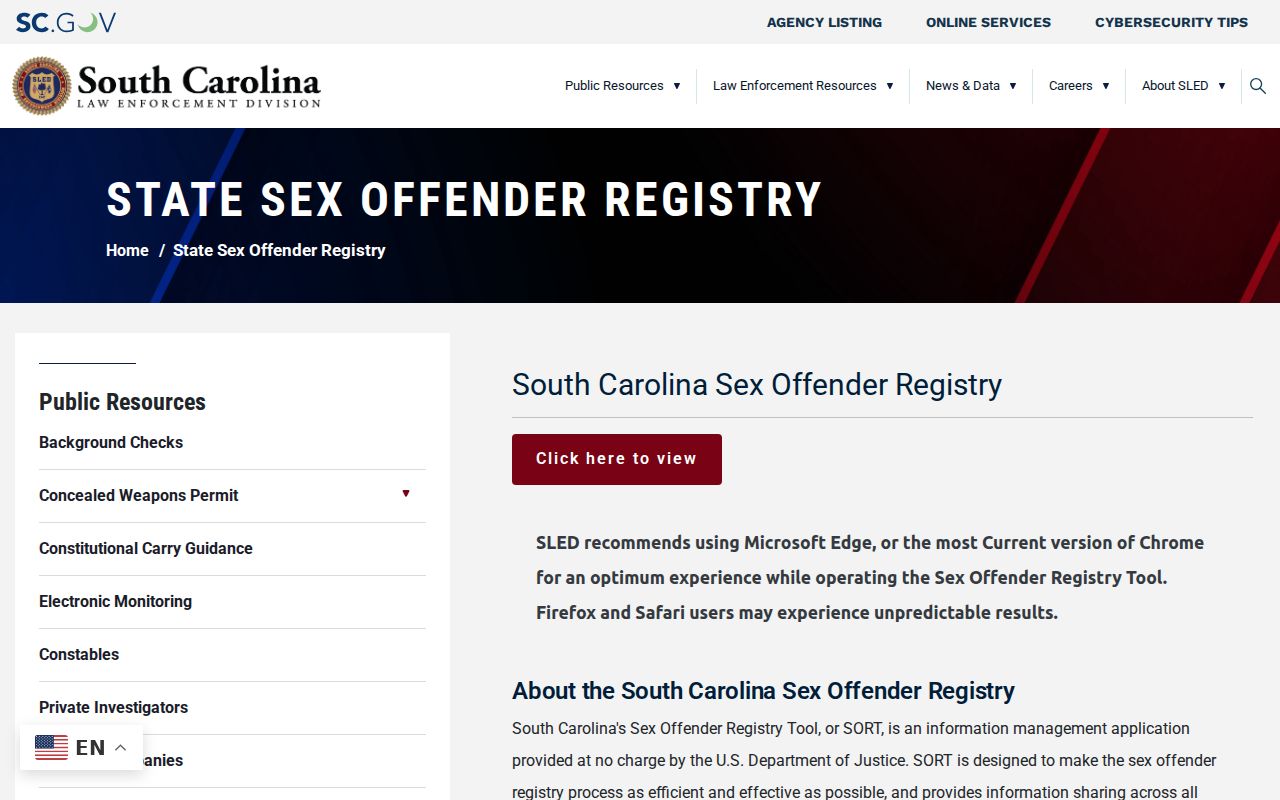
Starting from SLED avoids unofficial lists that may omit changes, conditions, or current registry warnings.
Edgefield Registry Name or Map Search
A name search asks whether a matching public registrant profile is present. It works best when the reader knows the correct spelling and checks aliases. A geographical search answers a different question. It plots public records around a usable location and can narrow by city, ZIP, county, and the radius options displayed live. For North Augusta, use a precise address because the city crosses the Edgefield and Aiken county line.
The official SORT geographical search is captured without centering a private registrant.
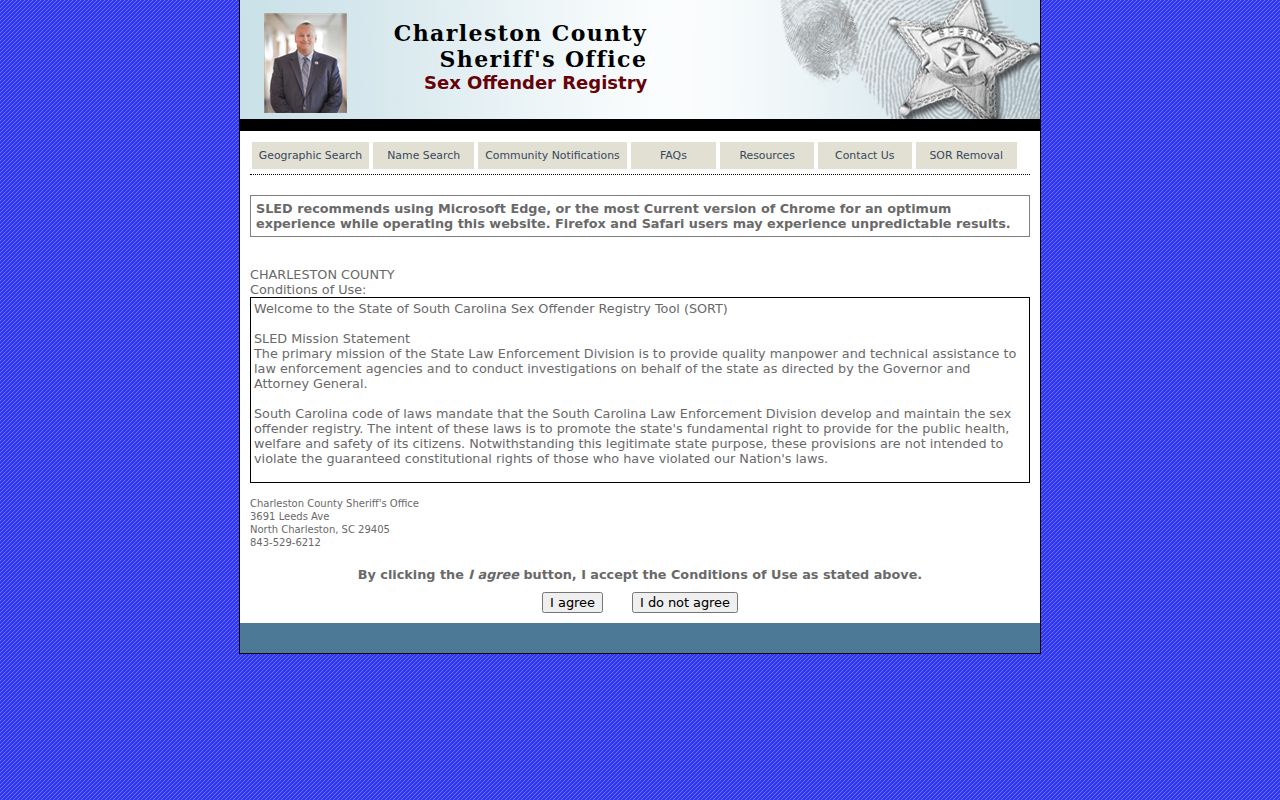
A mapped point supplies location context, but it does not prove that a person is present there at the moment of the search.
Searching the South Carolina Sex Offender Registry Tool
Use the official interface and read its live conditions before entering search terms. Choose the path that fits the question rather than treating the name and map tools as interchangeable. When a result seems relevant, compare several identifiers because shared names and changed appearances can cause mistakes.
- Open SORT, review the conditions of use, and enter the displayed captcha code.
- Choose a name search or geographical search, then supply the available Edgefield County criteria.
- Review the result list and compare name, aliases, photograph, location, and other public identifiers.
- Open the profile, read the conviction and registration details, and note when the public record was updated.
| Field Label | Type | Required | Notes |
|---|---|---|---|
| Conditions of Use | Acceptance | Yes | Must be accepted before search |
| Captcha or code | Text | Yes | Enter the displayed code |
| Name | Tab and form | No | Uses first and last name criteria |
| Address | Text | Geographic path | Enter a usable street location |
| City, state, and ZIP | Text and selectors | No | Narrow the geographic area |
| County | Selector | No | Select Edgefield County |
| Radius | Selector | No | Use the choices shown in the live tool |
| Community Notifications | Link and form | No | Opens the separate alert registration process |
Edgefield SORT Conditions and Updates
SLED cautions that registry information changes quickly and may be supplied by the registrant before a local agency verifies it. That warning is central to an Edgefield County sex offender search. A street result should be treated as a public record at a point in time, then checked through the official contact channel if accuracy is critical to a safety plan.
The assigned SORT conditions source shows the interface notice that controls use.
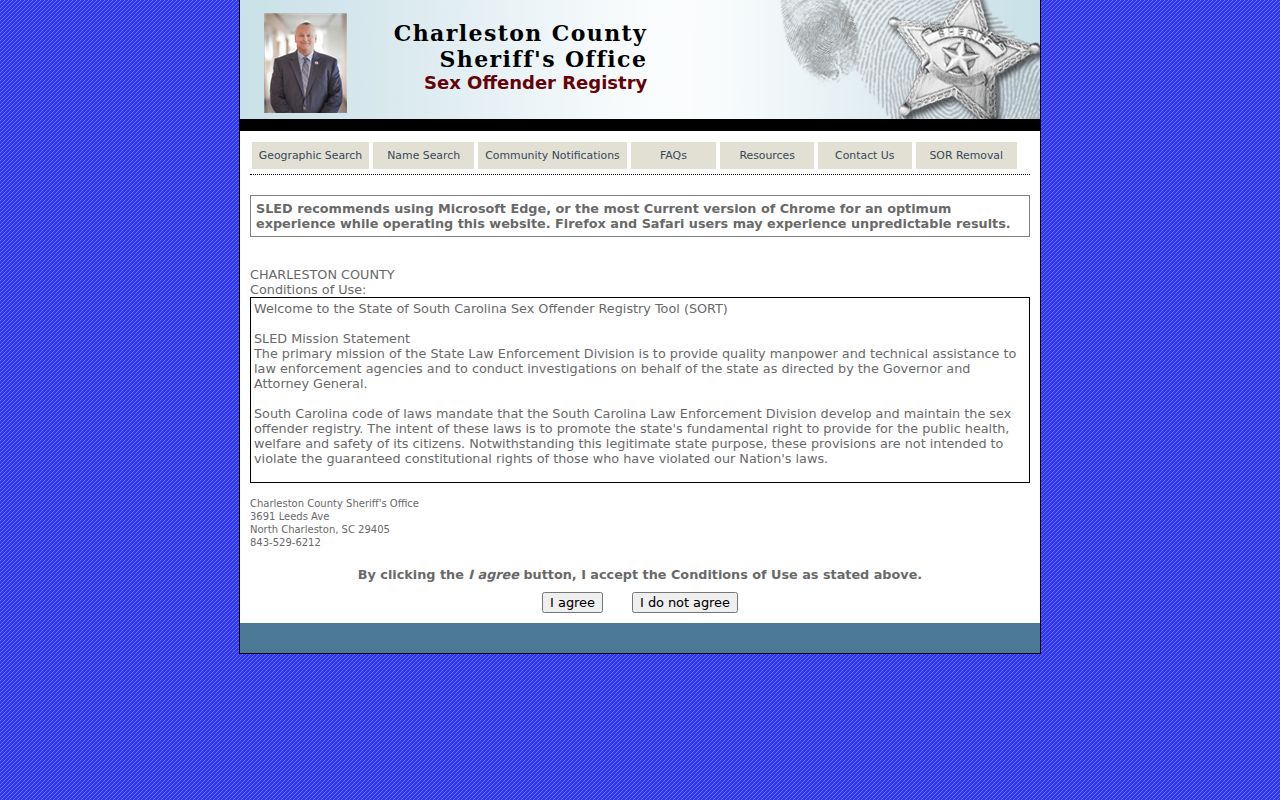
Those conditions protect both the public purpose of the registry and the need to avoid action based on stale or misunderstood information.
For an apparent error or more information, contact SLED SOR at 803-896-2601, fax 803-896-2311, or sor@sled.sc.gov. Suspected noncompliance belongs with local law enforcement or SLED. Do not confront the person shown in a profile.
What a Registry Profile Shows
A public SORT profile can combine identity, conviction, location, and compliance information. SLED describes multiple photographs over time, aliases, a residence map, and sexually related conviction offenses. Other fields may include physical description, offense statute and jurisdiction, registration jurisdiction, and status details. Vehicle, school or work, scars, marks, tattoos, and victim-category fields depend on the public configuration and individual record.
| Name and Aliases | Help distinguish identity and account for other names in the public record. |
|---|---|
| Photo and Description | May include several photographs over time and public physical details. |
| Registered Address | Shows the public location and map information available under state law. |
| Offense and Statute | Explains the conviction basis for registration, with jurisdiction and date where displayed. |
| Tier | Connects the record to South Carolina's tier and removal framework. |
| Registration Status | Shows public compliance or registration information where authorized. |
The profile is not a complete criminal case file. Pleadings, sentencing papers, and the certified disposition remain with the court. The registry summarizes the facts state law makes public for safety and notification.
Edgefield County Registry Notifications
SORT's Community Notifications function lets a reader register for alerts tied to supplied contact and location information. The process requires the conditions and captcha, followed by the Community Notifications link, registration fields, and acceptance of the notification agreement. Alerts add an ongoing layer to a one-time Edgefield County map search, but they remain dependent on information available to the registry.
For a search beyond South Carolina, use the U.S. Department of Justice National Sex Offender Public Website. It combines participating jurisdiction searches rather than replacing SORT's state detail.
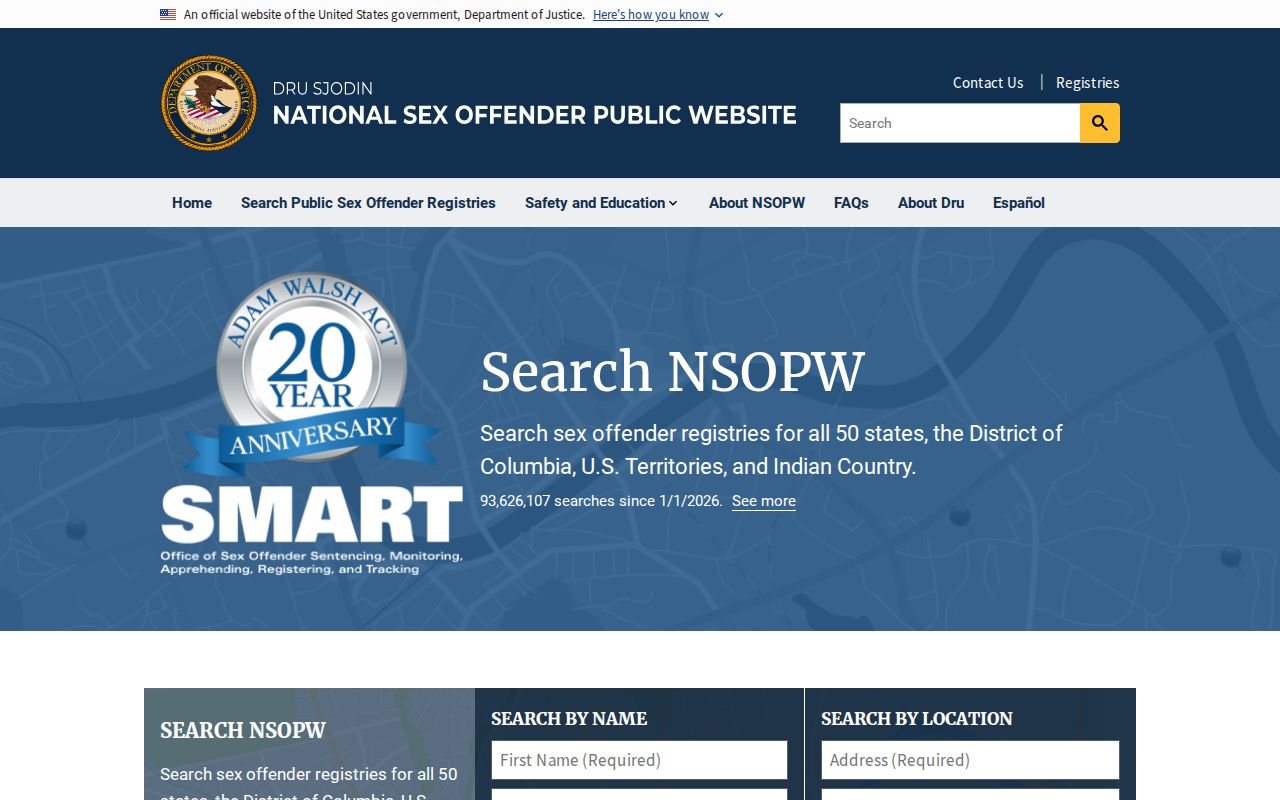
NSOPW is useful when a known person or place may cross state lines, while SORT remains the direct South Carolina source.
Registration Requirements and Levels in South Carolina
South Carolina's tier table describes the earliest removal pathway, not an automatic end date. The applicable time can run from registration, discharge without supervision, or the end of active supervision as the statute provides. A registrant must keep registering until written relief is granted. SLED's public guidance did not publish one universal verification frequency for each tier in the reviewed material, so current duties must be confirmed through SLED and the registering sheriff.
| State Tier | Earliest Pathway | Route and Public Status |
|---|---|---|
| Tier I | After at least 15 years on the applicable statutory measure | Paper request to SLED if every condition is met; profile remains until written relief |
| Tier II | After at least 25 years on the applicable statutory measure | Paper request to SLED; registration continues during review |
| Tier III | After 30 years from discharge or the end of active supervision | Motion in General Sessions rather than an administrative SLED request |
Tier and duration should be read with the conviction, supervision history, and current SLED instructions. Reaching the minimum time alone does not remove an Edgefield County profile.
Edgefield Registry Removal Packet
Eligible Tier I and Tier II applicants use SLED's paper process. The packet calls for the completed application, two recent FD-258 fingerprint sets, a $250 nonrefundable cashier's check or money order, sentencing and disposition papers, and proof of required treatment completion. SLED describes a 120-day determination after receipt of a complete qualifying request. The prosecuting agency receives notice, and an objection can affect the administrative route.
The statutory source for South Carolina criminal-record and registry rules is Title 23, Chapter 3.
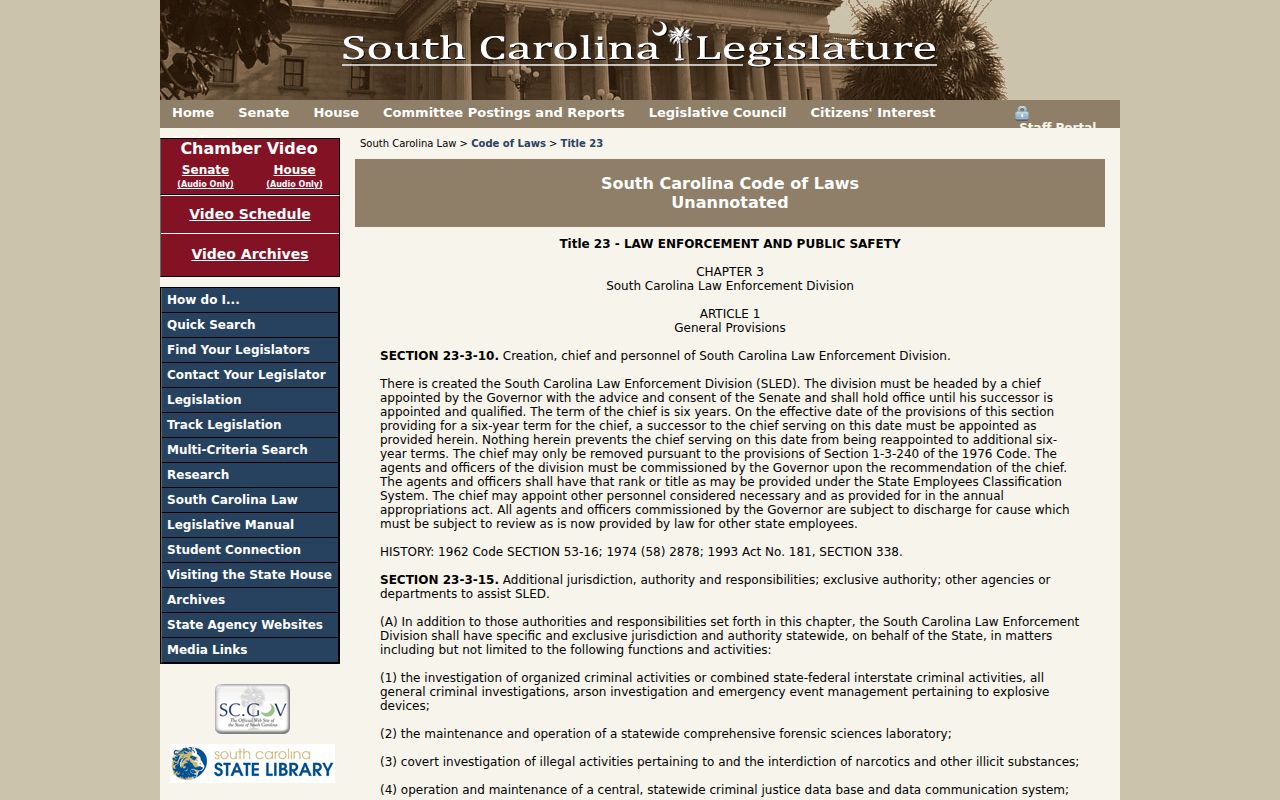
The court disposition is a key packet item, so an applicant may need the Edgefield County clerk before sending a removal request.
Send the administrative packet to SLED SOR Unit, P.O. Box 21398, Columbia, SC 29221. A denial has no internal SLED appeal. Judicial review and later reapplication follow the routes described by law and agency guidance, including a five-year wait to reapply after denial.
Supervision-completion information may also be needed. SCDPPPS Records Management Services uses records@ppp.sc.gov for that records channel, while treatment proof comes from the provider identified in the applicant's file.
Edgefield Registration Continues During Review
Neither a pending application nor the passage of the minimum period ends an Edgefield County registration duty. Continue every required sheriff check-in and update until written relief arrives. Tier III applicants proceed through General Sessions after the stated thirty-year measure. Tier I and II applicants use the SLED administrative route first when all conditions are met.
South Carolina's non-conviction destruction law addresses a different kind of record. The official Title 17, Chapter 1 source should not be confused with registry removal.
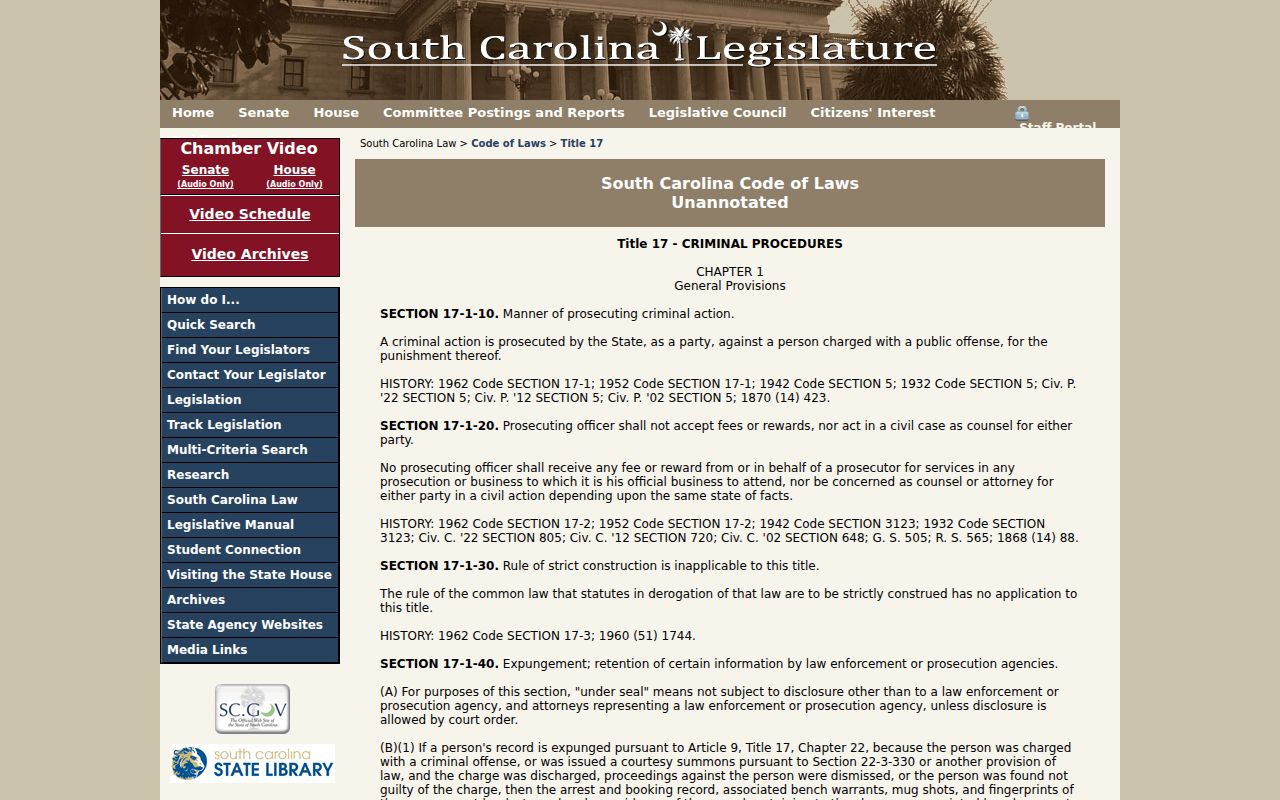
A qualifying arrest-record destruction rule does not erase a registration duty imposed by a registry-qualifying conviction.
Lawful Use and Community Notification
Registry information supports personal and family safety, informed community awareness, and practical planning around known locations. Read the profile as a statutory public record. Do not treat it as a risk score, repeat unverified claims, or use the map to confront anyone. Report a suspected violation to Edgefield County law enforcement or SLED so trained officials can assess it.
Misuse can add criminal penalties: S.C. Code §23-3-510 increases punishment when registry information is used to commit a crime, including added fines or imprisonment.
The statute allows up to $1,000 in added maximum fine and up to six months in added imprisonment for a misdemeanor committed with registry information. For a felony, imprisonment may increase by up to five years. SORT also bars using public information to unlawfully injure or harass. Lawful use protects the registry's public-safety purpose.
Note: A registry profile records a legal status and public fields, not a forecast of a person's present conduct.