
How to Check Criminal History in Johnston
Start a Johnston criminal records search with the event, not a broad name query. Johnston police hold the agency report for incidents their officers handled. Edgefield County Detention answers for a county booking. A municipal or Magistrate court keeps an assigned lower-level case, while General Sessions holds a prosecution above summary jurisdiction. SLED CATCH adds a separate statewide view after local sources have been checked.
Use this sequence to keep the report, booking, and court result distinct.
- Confirm that Johnston police handled the event and gather its date, place, and incident number.
- Request the releasable town police report and name each separate item or medium sought.
- Call Edgefield County Detention when current county custody is the question.
- Check the issuing summary court or Edgefield Public Index for the filed charge and outcome.
- Compare local results with SLED CATCH only for a statewide South Carolina history.
Johnston's Four-Part Record Handoff
A single Johnston incident can pass through four custodians. The town officer writes the narrative. County staff may create a booking. A court clerk opens the case, and SLED may receive fingerprints plus a later disposition. Public Index can show a court stage while saying little about what the officer wrote. A police report can describe an allegation without stating the final result.
Ask for an incident or offense report when the narrative is needed. Ask for a booking or intake record when custody is at issue. Ask the clerk for the docket, filed pleading, or certified disposition when the outcome matters. Use CATCH only when the goal is South Carolina's public, fingerprint-supported repository view. Clear terms make the Johnston handoff far easier to trace.
Keep a small record of each contact. Note the agency, date, reference number, court name, and stated disposition. That makes it possible to compare a Johnston police response with the county docket without blending two different files. If an identifier conflicts, return to the office that created it. Similar names are not enough to join records, and a missing statewide match does not cancel a local court result.
The Johnston Police Department
Johnston police create their own incident and arrest reports. The research did not locate official records-unit hours, an email, a request form, a fee table, a municipal portal inventory, or a verified holding arrangement. Confirm the current contact, identification rule, delivery method, and cost directly with the town. Unofficial directories should not fill those gaps.
A focused Johnston request should include the incident number if known, date and time range, location, requester's contact and role, requested report or media, and preferred format. Ask separately for dispatch audio, video, photographs, or crash records because each may require its own review. If the town does not hold the item, confirm which agency responded. Do not route every Johnston report to Edgefield County Sheriff merely because county detention later received the person.
Johnston Reports Versus Court Dockets
The Johnston report and court docket preserve different stages. An officer lists facts known at the scene and an initial charge. Prosecutors can later amend, dismiss, add, or decline charges. A docket then logs the filed case, events, bond, attorneys, disposition, sentence, and financial entries as available. The charge at booking may not match the offense of conviction.
Match the records through dates, incident and case numbers, court, and party identifiers. Do not rely on an overall status such as disposed. Read the result beside each charge. When a certified outcome is needed, contact the clerk that holds the prosecution. Public Index is a finding aid, and a Johnston police report is not proof of guilt.
Arrests and Bookings in Johnston
Johnston's holding arrangement was not published in the reviewed official sources. When a Johnston arrest leads to Edgefield County custody, call detention at 803-637-4124. The county expressly states that no online inmate lookup is available. Ask whether the person is presently held, what public booking identifier may be given, and which court or agency controls the matter.
A phone answer reflects current custody, which can change during the day. No match may mean bond, release, transfer, another jail, state prison, or federal custody. It does not erase the town report or court case. Historic booking material should be requested from the county custodian, while the arrest narrative remains with Johnston police. The county's Edgefield arrest history gives fuller custody routes.
Choosing Johnston's Criminal Court
Johnston cases can divide between Municipal or Magistrate Court and General Sessions. Summary courts hear authorized lower-level and traffic matters. Edgefield County Magistrate publishes jurisdiction over many charges generally within thirty days or a fine limit. More serious prosecutions proceed in General Sessions through the Eleventh Judicial Circuit. The statute and filed court control, not a casual felony or misdemeanor label.
The official South Carolina offense classification law provides the statewide framework.
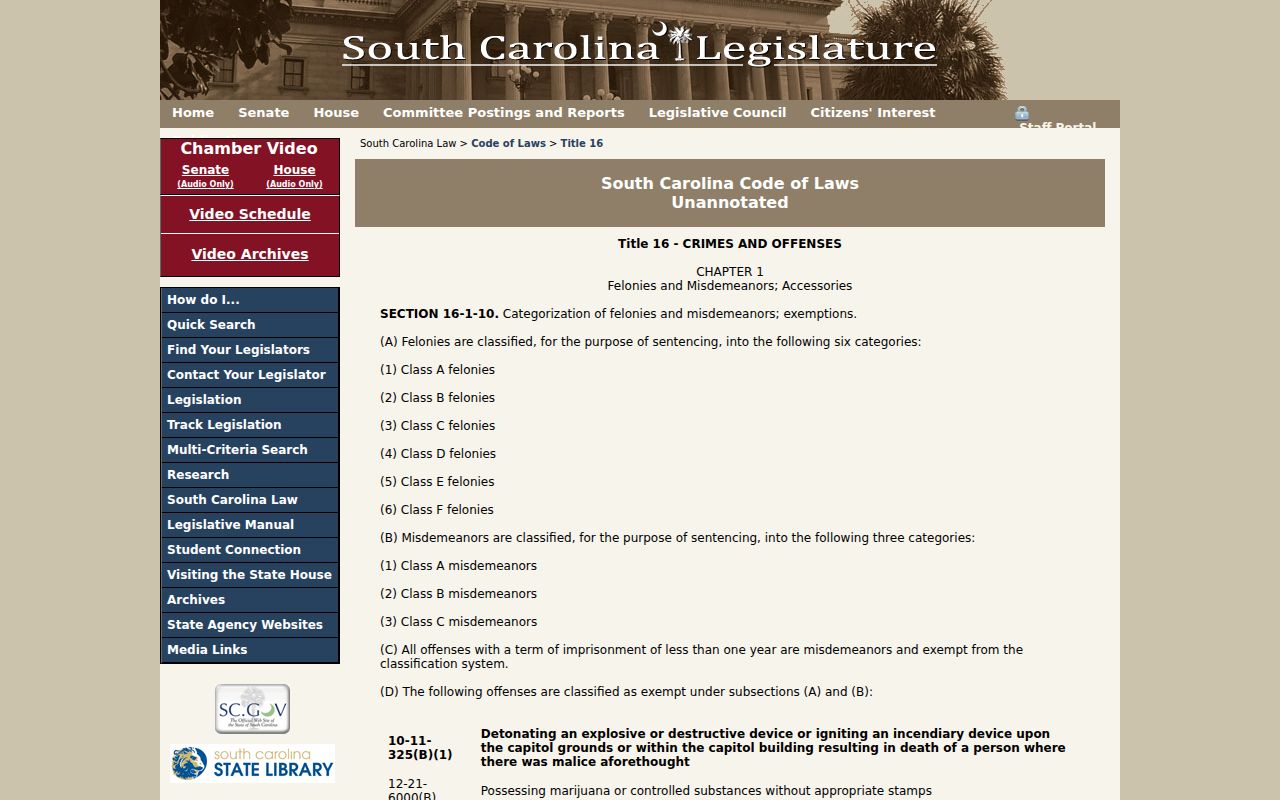
This source shows why the offense statute and authorized penalty guide the court route.
Use the court named on the citation, bond paper, or hearing notice. If no Edgefield Public Index result appears, contact the issuing summary court rather than concluding that Johnston has no record.
Johnston Municipal Court Records
Johnston municipal records may cover ordinance, traffic, and authorized lower-level state-law matters. No official Johnston portal fields or complete municipal request procedure were located in the accessible sources. Confirm current lookup, copy, certification, payment, and fee terms with the issuing court. Online payment, where offered, should not be mistaken for a complete public docket.
| Court Level | Johnston municipal court for assigned city matters; Magistrate or General Sessions as jurisdiction requires. |
|---|---|
| Case Types Heard | Ordinance, traffic, and authorized lower-level criminal matters at municipal level. |
| Lookup Channel | Issuing court first; Edgefield Public Index when the filed matter is published there. |
| Docket Contents | Case number, charge, events, status, disposition, sentence, and financial entries as available. |
| Copies & Fees | Municipal copy and certification amounts were not located; confirm with the holding court. |
A docket entry is not a certified disposition. Ask the clerk for the filed order when the precise result matters.
Johnston Record Access in April
Johnston is known for its April Peach Blossom Festival and its place in Edgefield County's peach-growing region. That identity can affect practical office planning only when the town posts an official closure or schedule notice. It does not support any claim about crime, arrests, or enforcement levels. A community event must never be turned into an unsupported criminal-record trend.
Before traveling to a Johnston counter near a holiday or festival date, verify the schedule through an official town notice. If no current closure is posted, do not assume one. A mailed or electronic request may still require staff confirmation because no published town records turnaround, records hours, or delivery standard was found.
Plan the request around the record's custodian rather than one trip to a general office. The town should answer for Johnston police material. Edgefield County offices answer for county detention and county court files. An older permanent record may require an archive inquiry. Asking in advance where the file is kept can prevent a festival-week visit from becoming a chain of referrals.
Where Johnston Records End Up
Johnston police begin the trail with an agency report. If county detention books the person, it creates intake data and captures fingerprints. The proper summary court or General Sessions then records the filed charge and result. Fingerprints and disposition reports support the SLED computerized criminal history. Each step has its own timing and custodian.
Record flow: Johnston Police › Edgefield County Courts › South Carolina Law Enforcement Division
SLED CATCH is a $25 public name search for South Carolina history, plus the current online service fee. Exact name and date of birth matter, aliases can cause a miss, and fingerprints make identity matching stronger. CATCH excludes wanted-person and sex-offender data. A missing result should be compared with Johnston reports and court files rather than treated as proof of no history.
Checking Johnston Warrant Records
Edgefield County publishes no verified online warrant list. Public Index absence does not prove that no Johnston warrant exists. A recently issued or sealed arrest warrant, a summary-court bench warrant, or a delayed entry may not appear in a routine search. Begin with the court or agency identified on the notice and ask how to resolve the matter safely.
For the county layer, Sheriff non-emergency is 803-637-5337, Magistrate Court is 803-637-4052, and the Clerk is 803-637-4080. A Johnston municipal bench warrant should be checked with the issuing municipal court. An arrest warrant alleges an offense, while a bench warrant commonly enforces appearance or compliance. Neither is a conviction. Do not appear unannounced based only on website advice.
Johnston Expungement Record Route
South Carolina uses expungement for eligible record destruction or removal. First obtain the actual Johnston disposition. A dismissal, nolle prosequi, acquittal, diversion result, conditional discharge, and conviction do not share one rule. A misdemeanor label alone does not establish eligibility. The offense, penalty, waiting period, prior history, and statutory exclusions control.
The Eleventh Circuit Solicitor serves Edgefield matters and administers the application process.
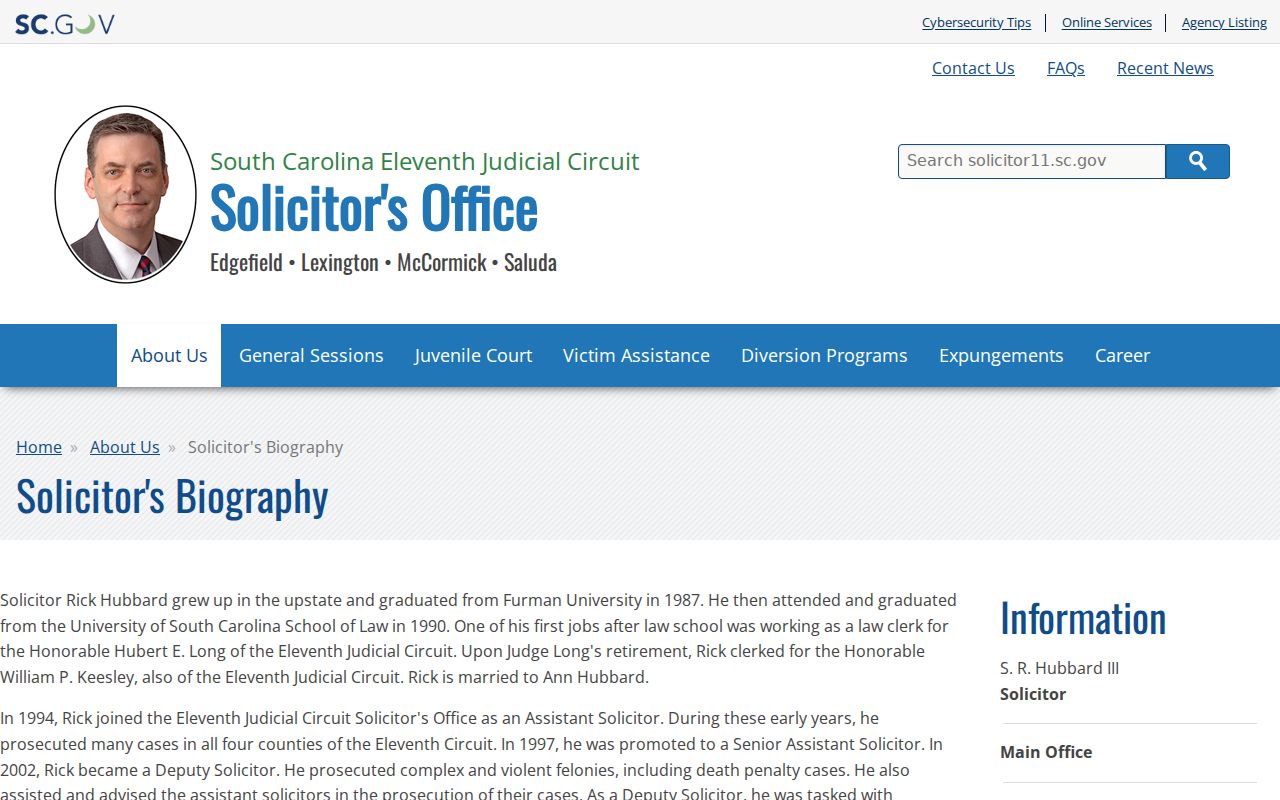
The Solicitor verifies the case and eligibility with the proper court and SLED rather than relying on a short online label.
The South Carolina diversion and expungement statutes describe several program routes.
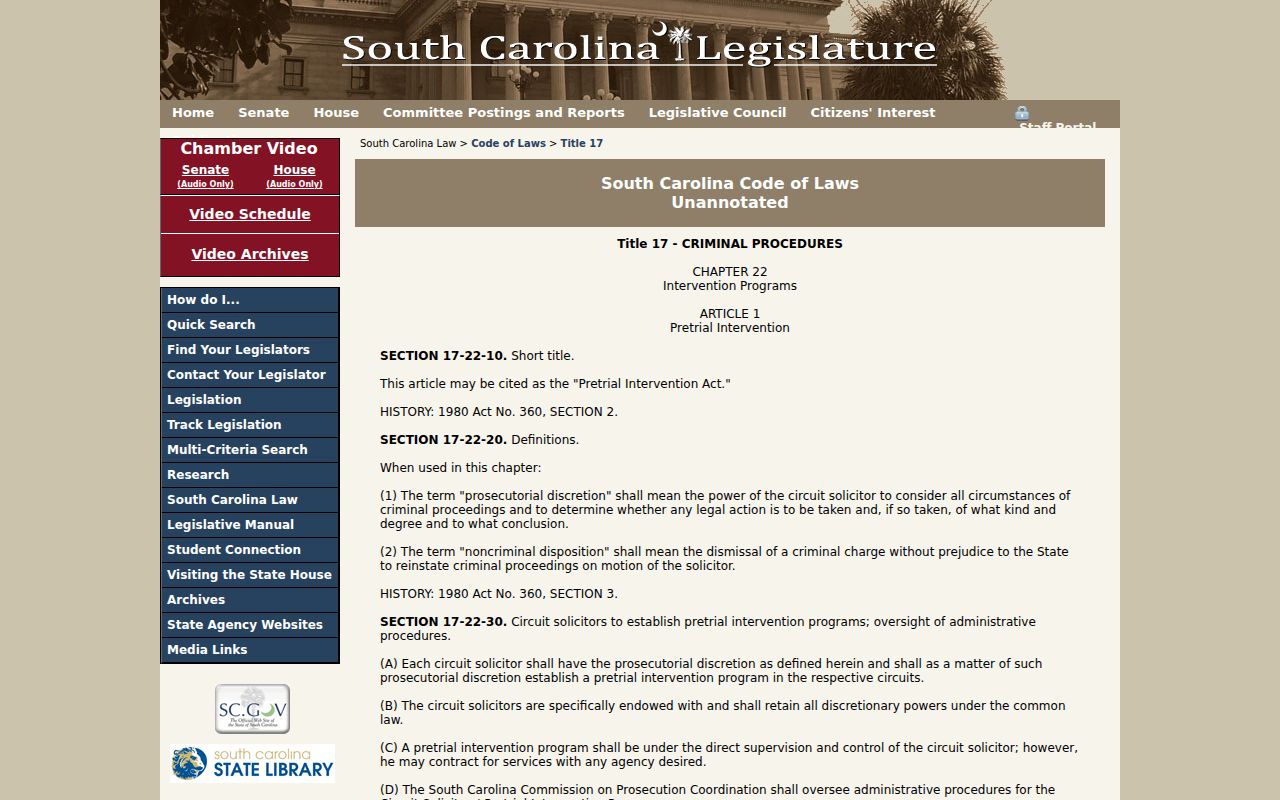
The correct statutory route depends on the exact Johnston outcome, and no local fee should be quoted without current official confirmation.
For qualifying lower-level convictions, summary-court expungement law supplies a separate framework.
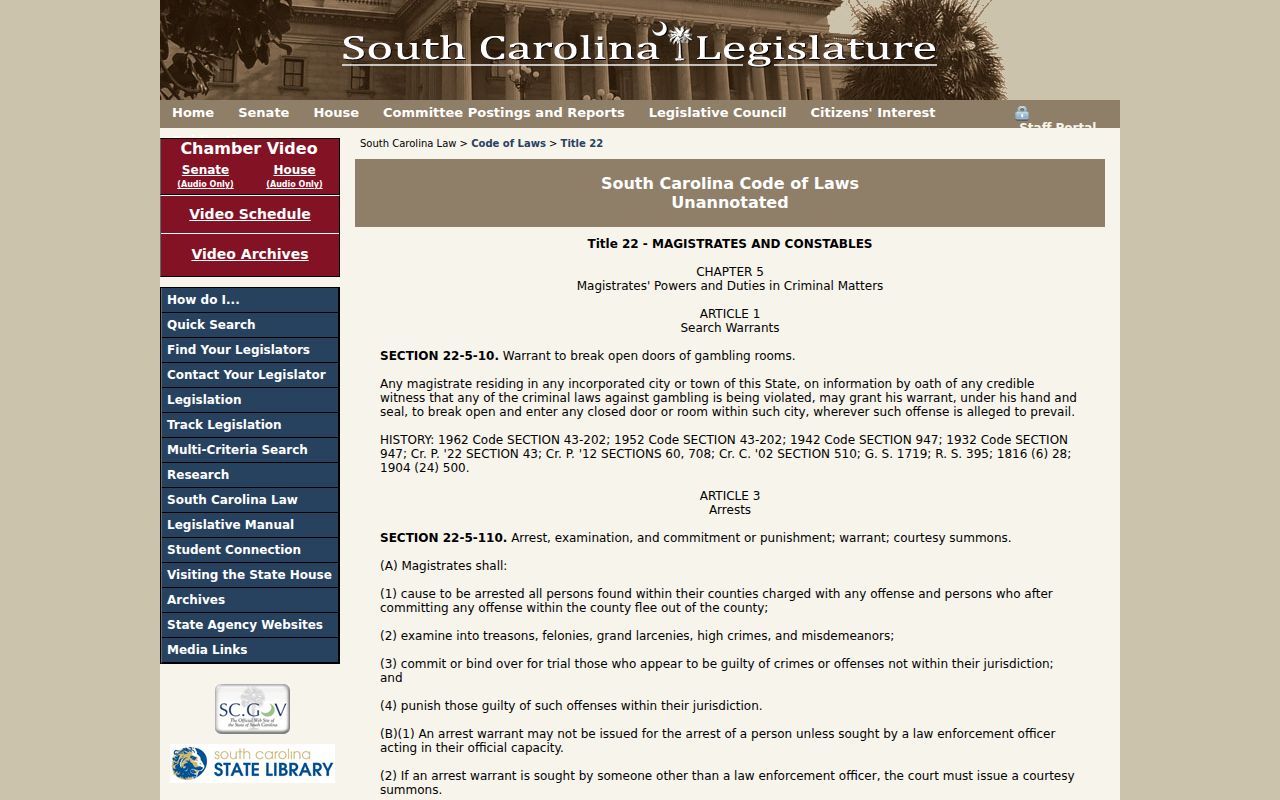
A certified Johnston court record is the sound starting point before any relief inquiry.
Public Access Rules
The South Carolina Freedom of Information Act applies to releasable Johnston public records, subject to exemptions. A request should describe the report, date, place, involved agency, incident or case number, desired format, and contact method. Ask for an advance estimate and for nonexempt portions to be separated from withheld material. Active investigations, juvenile data, victim identifiers, medical information, personal details, sealed files, and expunged records may be restricted.
Key Statutes:
South Carolina Freedom of Information Act provides inspection and copy procedures subject to exemptions and reasonable rules.
S.C. Code §§23-3-110 and 23-3-120 assign criminal-identification duties to SLED and require fingerprint submissions.
S.C. Code §17-1-40 requires destruction of qualifying non-conviction arrest and booking records, with exceptions.
The official FOIA text states that access framework.
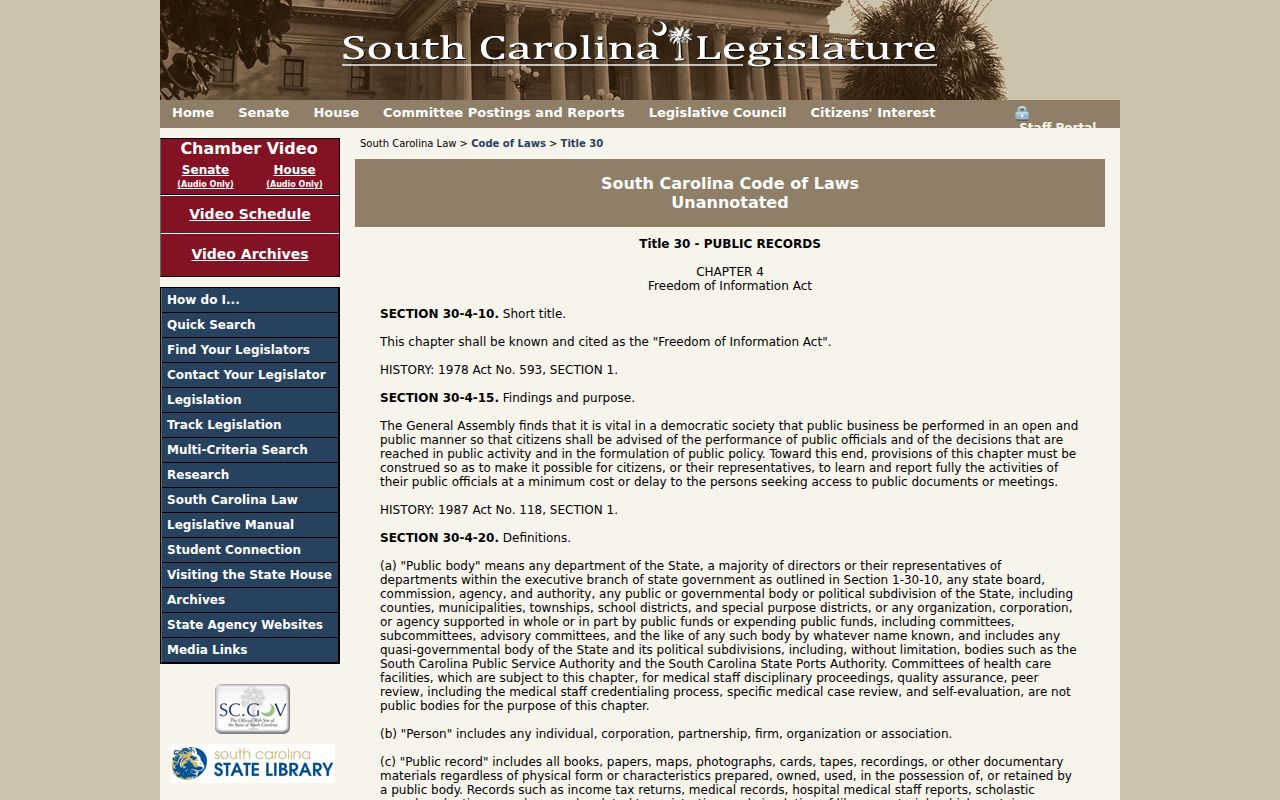
FOIA does not merge town police, county booking, and court files into one record, so each request still goes to its custodian.
Keep the Johnston agency response with the date of the search. A jail answer can change within hours, a court docket changes when the clerk posts an event, and CATCH depends on fingerprint and disposition submissions. If an office withholds part of a record, ask for the legal basis and the nonexempt remainder. If no file is found, verify the agency and event date before deciding that the search is complete.