
Criminal Cases in the Edgefield County Courts
Edgefield County criminal court cases are divided by jurisdiction. The Edgefield courthouse listing places the county in South Carolina's Eleventh Judicial Circuit. Circuit Court's Court of General Sessions hears felony matters and misdemeanors carrying more than thirty days of confinement or more than a $1,000 fine. The Clerk of Court keeps that criminal case file at 129 Courthouse Square in Edgefield. Municipal courts can hear city ordinance and assigned summary offenses. The county Magistrate Court handles many traffic and misdemeanor charges within its lower penalty limit.
Those divisions matter when a name does not appear online. A General Sessions filing belongs with the circuit clerk, but a summary charge may remain at Magistrate Court or a municipal court. Only some municipal records reach the Public Index. The online result is therefore one access channel, not the whole Edgefield County court system. The official Clerk of Court website supplies a direct route to the office that holds filed pleadings and certified dispositions.
The official Judicial Branch courthouse source shows the local context for Edgefield County criminal case records.
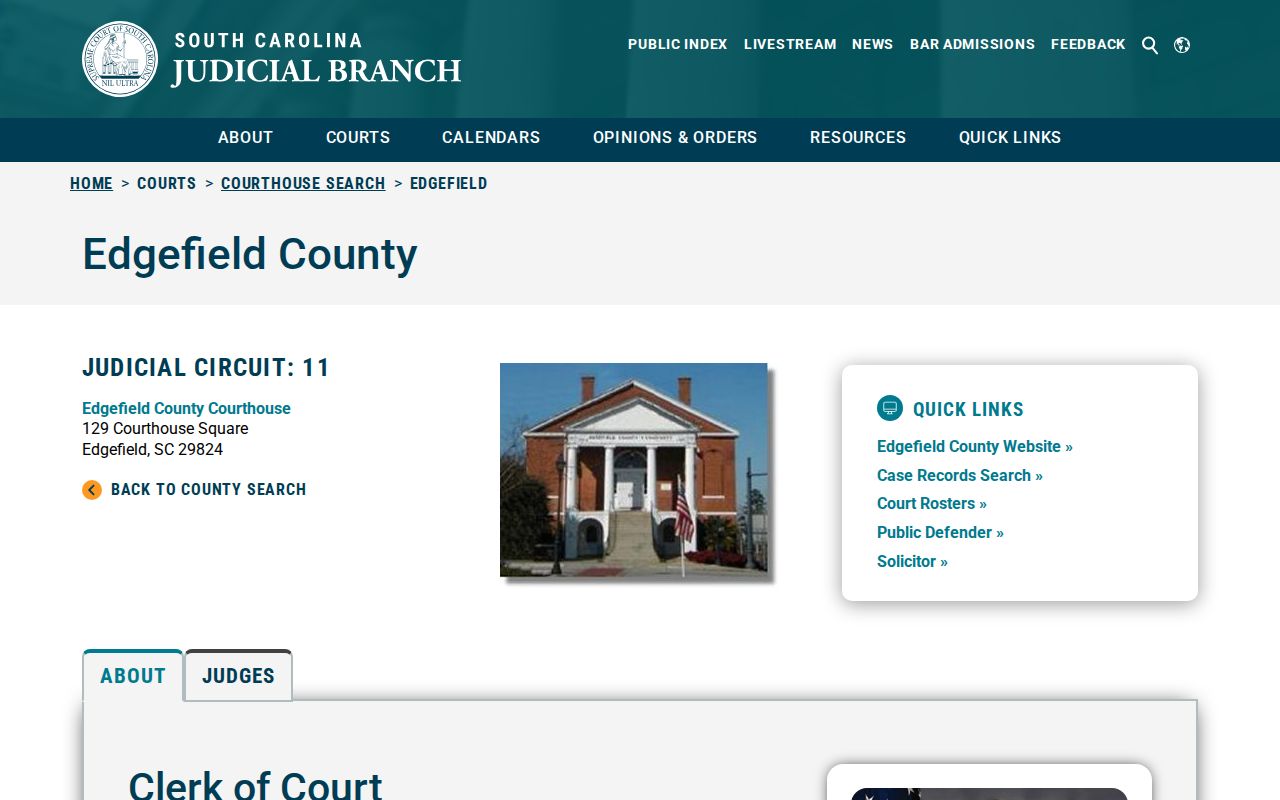
That courthouse entry helps confirm the correct county, circuit, clerk, and court before a records request begins.
Edgefield County Public Index Rules
The county-specific Edgefield Public Index is the main remote channel for active and completed Edgefield County criminal court cases. It can expose a case number, filing date, court agency, party role, charge, status, bond activity, attorney entries, docket actions, hearing information, financial entries, and disposition. Availability varies by file. The Judicial Branch also warns that cookies and JavaScript must be enabled. A browser may need a pop-up exception before the case-detail window will open.
Searchers should distinguish three fields that often seem alike. A case number identifies the prosecution. Charge status describes the posture of one count. A disposition states how that count ended. One case can contain several charges with different outcomes, so an overall label cannot replace a line-by-line review. Home addresses are no longer displayed for new or existing Public Index cases as of January 1, 2026, which is a privacy change rather than proof that a party record has vanished.
The captured Edgefield Public Index interface shows the county search channel used for Edgefield County case records.
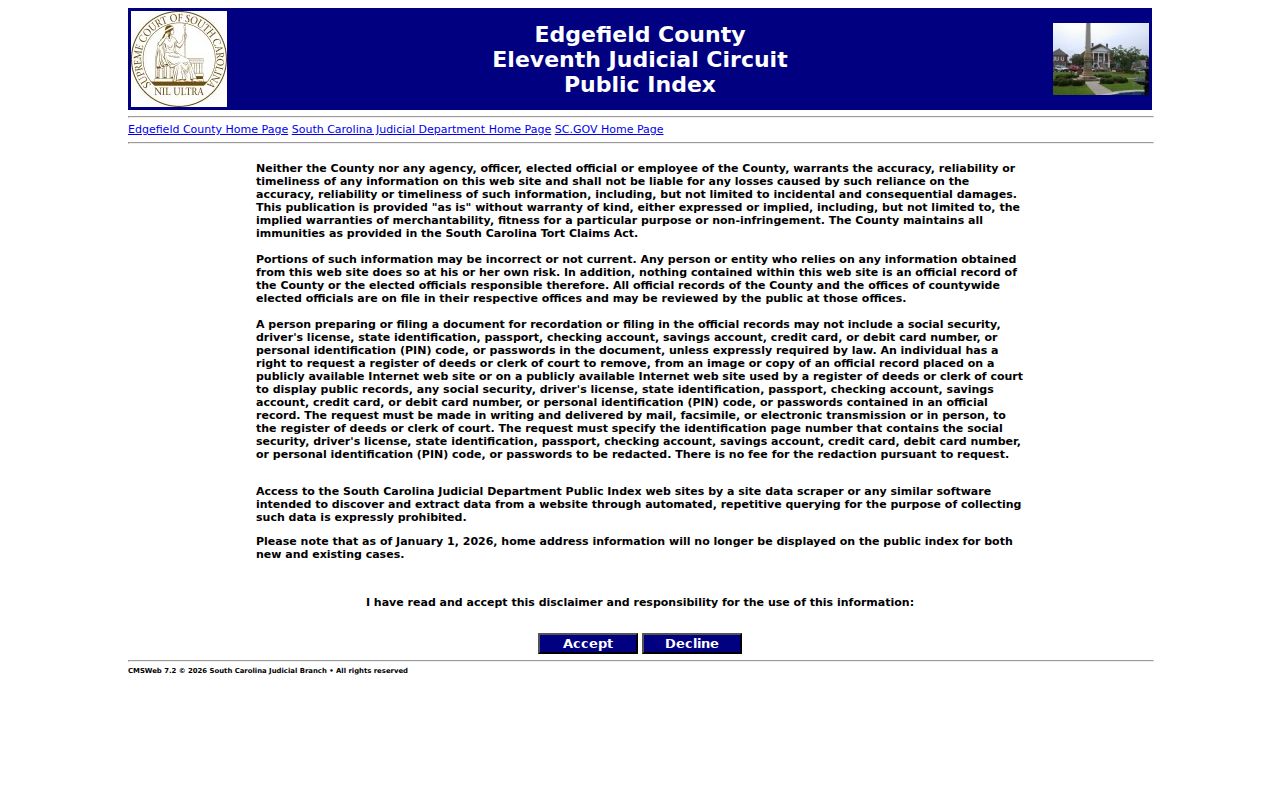
The interface is best used with exact identifiers, then checked against the clerk's copy when formal proof is needed.
How to Search Case Records
Start online when the filing court is likely to be General Sessions. Use the Judicial Branch Case Records Search gateway, choose Edgefield County, and preserve the full case number once a likely match appears. A known number is stronger than a name because spelling variants and shared names can create false matches. If a matter is absent, contact the correct summary court instead of assuming no case exists.
- Open the Judicial Branch gateway and select Edgefield County in Circuit 11.
- Search by the exact case number when known, or use party-name spelling variants.
- Apply the court agency, case type, filing year, or date range shown by the live interface.
- Allow the detail window, then read each charge, event, bond entry, and disposition separately.
- Call the Clerk at 803-637-4080 for pleadings, a certified disposition, or a file that the web view does not supply.
| Field Label | Type | Required | Notes |
|---|---|---|---|
| County | Gateway selection | Yes | Choose Edgefield County |
| Case number | Text | No | Use the exact year, court, county, and sequence format |
| Party name | Text fields | No | Try known spelling variants |
| Court agency or type | Selector | No | Options depend on the county index |
| Date range | Date fields | No | Narrows broad name results |
| Case-detail link | Result control | No | Browser pop-ups may need permission |
Edgefield County Certified Court Copies
An online docket is a finding aid. A certified copy is a clerk-issued record used to establish what the court filed or decided. For Edgefield County criminal court cases, contact Clerk Charles L. Reel's office at 129 Courthouse Square, Edgefield, SC 29824, mail to P.O. Box 34, Edgefield, SC 29824, call 803-637-4080, or write to creel@edgefieldcounty.sc.gov. State the case number, document sought, and whether certification is required. Current plain-copy, search, and certification fees were not published in the reviewed official sources, so ask for a cost estimate first.
The official clerk source identifies the local record custodian.
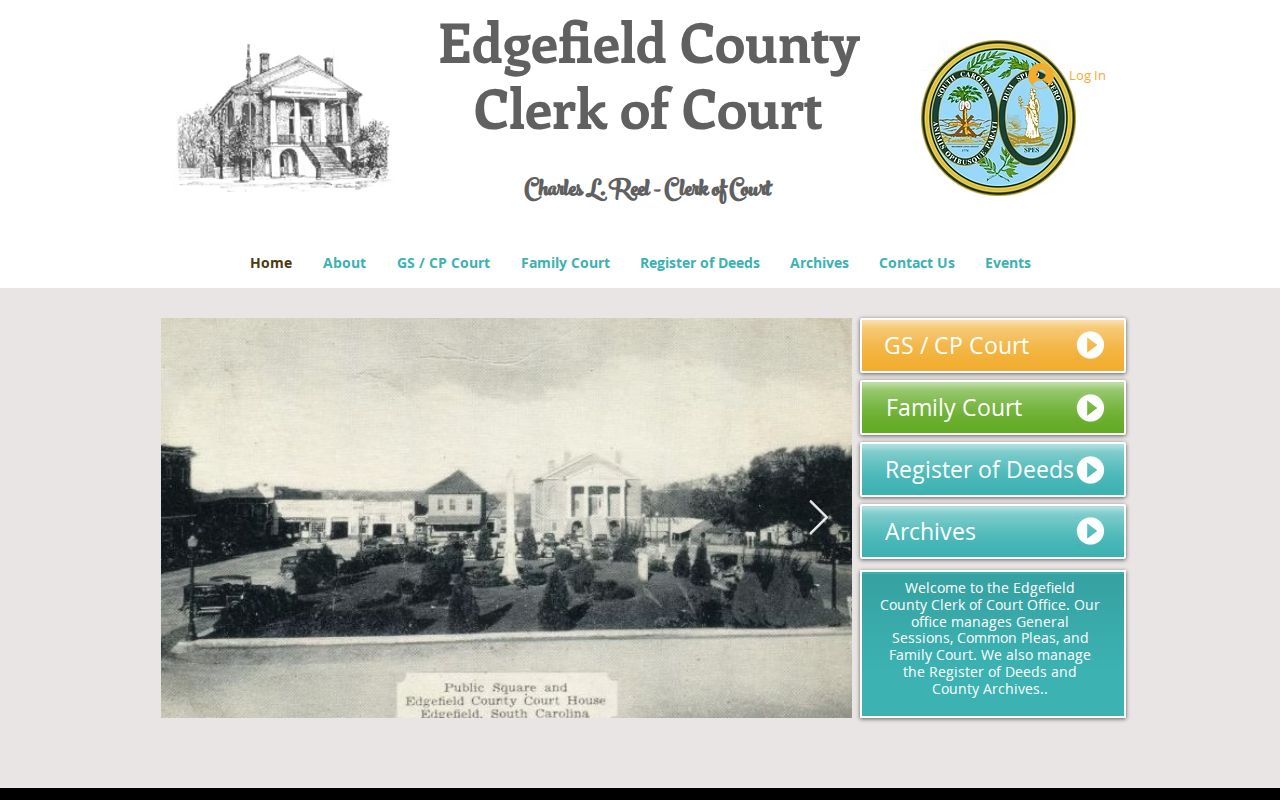
The clerk channel is especially important when a web summary lacks the charging paper, signed order, sentence, or certified disposition needed to understand the file.
Edgefield County Clerk of Court
129 Courthouse Square
Edgefield, SC 29824
Mail: P.O. Box 34
803-637-4080
What the Case File Shows
A criminal court file centers on one prosecution, not on a person's full criminal history. It ties a court and case number to filed charges, hearings, motions, pleas, and the outcome of each charge. A docket entry is the dated register of an event. It may point to a filing without displaying the document itself. Edgefield County searchers should request the signed judgment or disposition when the precise outcome matters.
| Case Number and Court | Identifies the prosecution, filing year, county, and court agency. |
|---|---|
| Charging Document | Shows the warrant, indictment, or other filed accusation that moved the charge into court. |
| Docket Entries | List filed actions and events in date order, including motions and court activity. |
| Hearing Dates | Show scheduled or recorded appearances and may connect to a court roster. |
| Disposition and Judgment | State how each charge ended, such as conviction, dismissal, acquittal, or nolle prosequi. |
| Sentence and Conditions | Record the consequence imposed after conviction and any court-ordered terms. |
A nolle prosequi means the prosecutor elected not to proceed at that time. It is not a guilty finding. Likewise, a dismissal and an acquittal are distinct outcomes even though neither is a conviction.
Edgefield County Criminal Court Rosters
The South Carolina Court Roster Search answers a different question from the Public Index. A docket traces filed activity; a roster helps locate scheduled court sessions. Searchers can use the roster to check an upcoming appearance, but the schedule does not establish the final case result. Hearings can move, and a listing should be checked against the clerk or the court handling the matter.
The official court roster gateway is captured in the assigned Edgefield County court image.
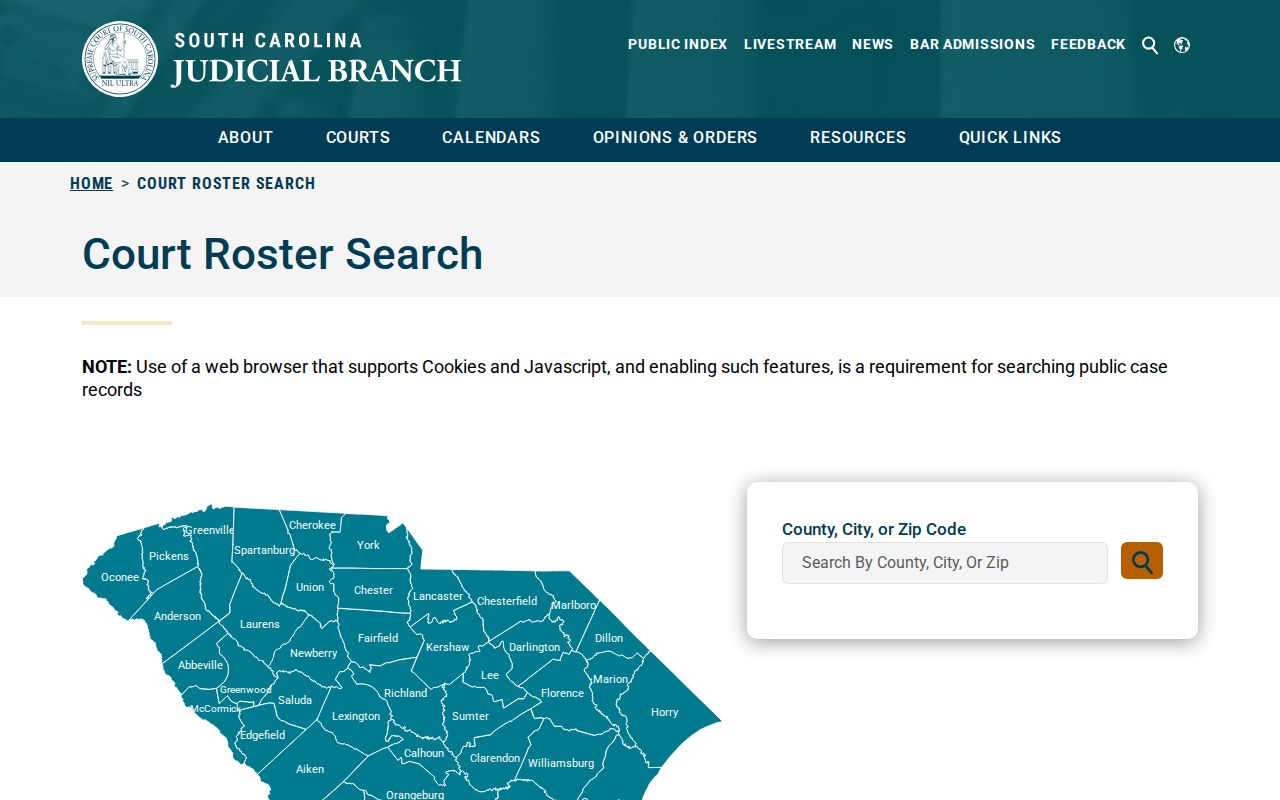
Pair the roster with the case detail and clerk record so a scheduled event is not mistaken for a disposition.
Stages of a Criminal Case
An Edgefield County case may begin with an arrest and a Magistrate bond hearing, then move to a first appearance and formal charging. General Sessions matters are assigned through the Eleventh Circuit Solicitor. Discovery and pretrial work follow. A case may enter an authorized diversion program, resolve by plea, proceed to trial, or end before trial. If the Magistrate lacks power to set bond, General Sessions handles that bond issue.
Case flow: Charges Filed › Arraignment › Pretrial › Plea or Trial › Disposition › Sentencing
Diversion can avoid a conviction and criminal record after successful completion, according to the Eleventh Circuit Solicitor. It does not mean the early arrest, charging paper, and later court outcome are the same record. Each stage leaves a different entry, and the final signed action deserves the most weight.
Note: A scheduled hearing or open status does not predict whether an Edgefield County charge will end in conviction.
Edgefield Summary Court Case Gaps
Edgefield County Magistrate Court is at 264 Star Road, Edgefield, SC 29824. It is open Monday through Friday from 8:30 a.m. to 5 p.m. and can be reached at 803-637-4052 or Magistrate@edgefieldcounty.sc.gov. The court hears many criminal and traffic matters within summary jurisdiction. Its online payment link is not a complete case-record search, and a payment option does not prove that every docket field is public.
Municipal cases create another gap. Only some city matters appear in the Public Index. When the issuing document names a municipal court, contact that court directly. When it names Magistrate Court, use the official Magistrate Court channel. This routing is more reliable than repeating a countywide name search and expecting a lower-court case to appear.
Reading Edgefield Court Dispositions
Several short terms control how an Edgefield County criminal case should be read. They describe different events and cannot be treated as synonyms. The charge at arrest may also change before the prosecutor files or resolves the case.
- Indictment
- A grand-jury charging instrument used in General Sessions.
- True bill
- A grand jury's approval of an indictment.
- Disposition
- The recorded outcome of one charge.
- Nolle prosequi
- The prosecutor's choice not to continue that charge at that time.
- Sentence
- The court-imposed consequence after a conviction.
Read the disposition date and wording for every count. Then compare it with the signed order or certified clerk record. That sequence prevents an old accusation or general docket status from being reported as the final judgment.
Access & Restrictions
South Carolina's Freedom of Information Act provides inspection and copying procedures for public records, subject to exemptions, reasonable rules, and fees. Court access still has limits. Juvenile information, expunged or sealed material, victim data, sensitive identifiers, and protected portions of active matters may not appear in a public Edgefield County court search. Public Index redaction also means the remote view can contain less than the clerk-maintained file.
For an old permanent file, ask whether the clerk transferred it to Edgefield County Archives at 124 Courthouse Square, 803-637-4104, or archive@edgefieldcounty.sc.gov. The State Archives guide includes General Sessions material and sheriff jail books among Edgefield holdings. The official indigent-defense directory lists Edgefield counsel at the courthouse, but appointed defense counsel is not the records custodian. If the clerk withholds part of a public record, ask which legal rule applies and whether separable, nonexempt portions can be inspected. Do not use a missing web result as proof that no court record exists.